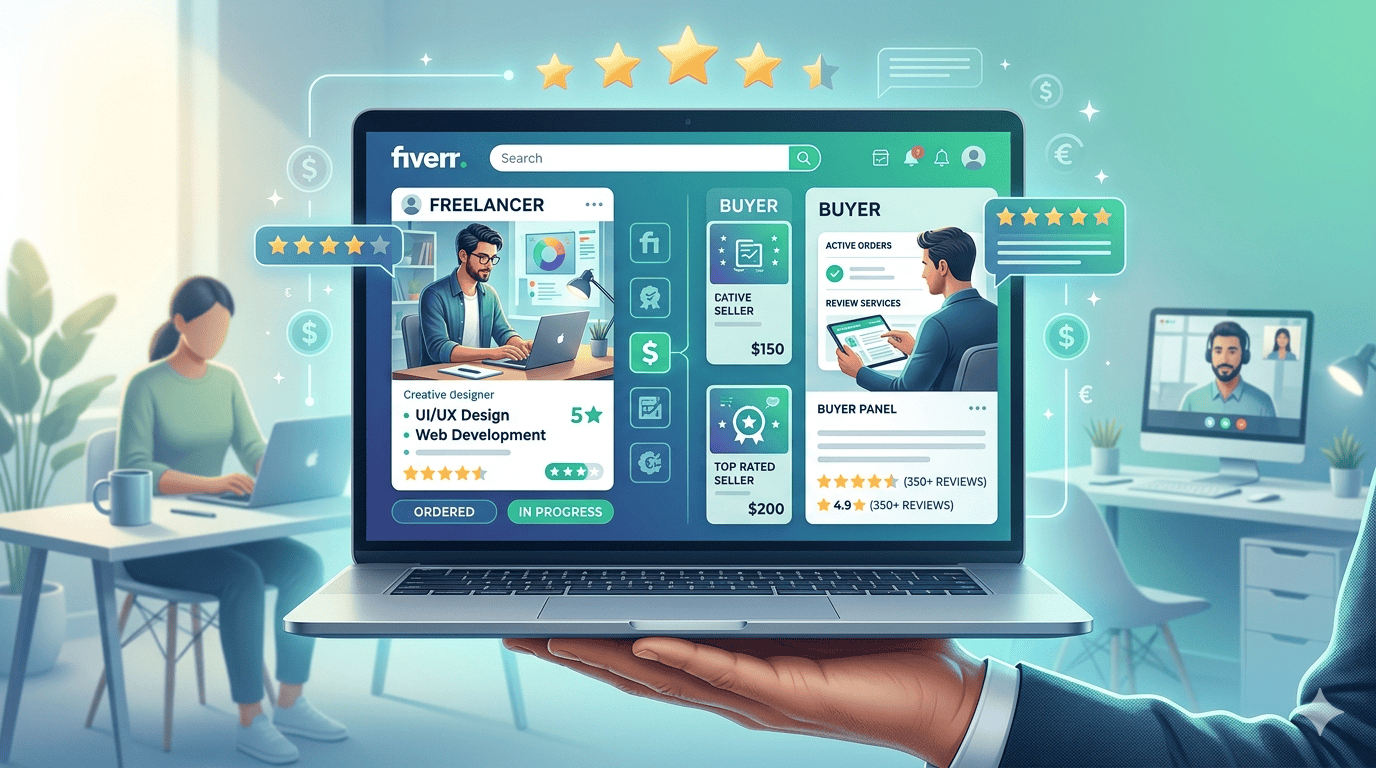
What Is Fiverr and How Does It Work?
Fiverr is one of the world’s largest freelance marketplaces where people can buy and sell services online. It started as a platform where services were offered for just $5, but today it has evolved into a full-scale marketplace with pricing ranging from a few dollars to thousands.
Fiverr works on a gig-based system. Freelancers create service listings called “gigs,” and buyers can browse, compare, and hire them directly. Payments are handled through Fiverr’s system, which adds a layer of security for both parties.
Company Background and Global Reach
Fiverr was founded in 2010 and has grown rapidly in the gig economy space. It connects millions of buyers and sellers across more than 700 categories including design, writing, video editing, programming, and digital marketing. The platform is used worldwide, including India, making it accessible for freelancers looking to earn online.
Is Fiverr Legit and Safe in 2026?
Platform Legitimacy
Fiverr is a legitimate platform used by millions globally. It offers built-in payment protection and dispute resolution systems, making it generally safe to use. According to security analysis, Fiverr is considered a real and trusted marketplace, though users should still stay cautious like any online platform.
Safety Concerns
However, safety depends heavily on how you use the platform. Some users report encountering scammers, especially through messages that try to take conversations outside Fiverr.
From community discussions, new users often receive spam or scam messages quickly after creating gigs.
“I got 10–12 scam messages right after joining”
So while Fiverr itself is legit, user awareness is very important.
Real User Experience — What People Say
Positive Experience
Many users have had great results using Fiverr. Some freelancers build full-time income streams, while buyers find affordable services quickly. Reviews highlight fast delivery, wide talent options, and cost savings compared to agencies.
Negative Experience
At the same time, there are consistent complaints about poor customer support, scam messages, and inconsistent service quality. Some users feel that Fiverr does not always take strong action against bad sellers or buyers.
This creates a mixed reputation where your experience depends on who you work with.
Earnings Potential on Fiverr
For Beginners
Fiverr can be a good starting point if you have a skill like writing, graphic design, or video editing. It allows you to start earning without needing your own website or clients.
For Experienced Freelancers
Experienced freelancers can scale their income significantly, but competition is very high. The platform charges around a 20% commission, which can reduce overall earnings.
Fiverr Fees and Charges
Fiverr takes a service fee from both buyers and sellers. Sellers pay around 20% commission on each order, while buyers pay a small service fee depending on the order value. This is one of the biggest drawbacks of the platform.
Pros and Cons of Fiverr
Advantages
Fiverr is easy to start, has global reach, and provides a steady flow of potential clients. It is especially useful for beginners who want to enter freelancing quickly.
Disadvantages
The platform is highly competitive, and getting the first order can take time. There are also issues with spam messages, fake buyers, and inconsistent support.
Who Should Use Fiverr?
Fiverr is best for freelancers who already have a clear skill and are willing to compete in a crowded marketplace. It is also useful for businesses looking for affordable services quickly.
However, it may not be ideal if you are looking for stable, long-term income without building your own brand.
Final Verdict — Is Fiverr Worth It?
Fiverr is a real and working platform, but it is not a guaranteed income source. It offers huge opportunities, but also comes with challenges like competition, fees, and scams.
If you use it smartly, avoid scams, and focus on building a strong profile, Fiverr can be a powerful tool for earning online in 2026.
Overall Rating
Fiverr performs well in terms of accessibility and opportunities, but loses points on competition and support. It is best seen as a starting platform rather than a long-term dependency.