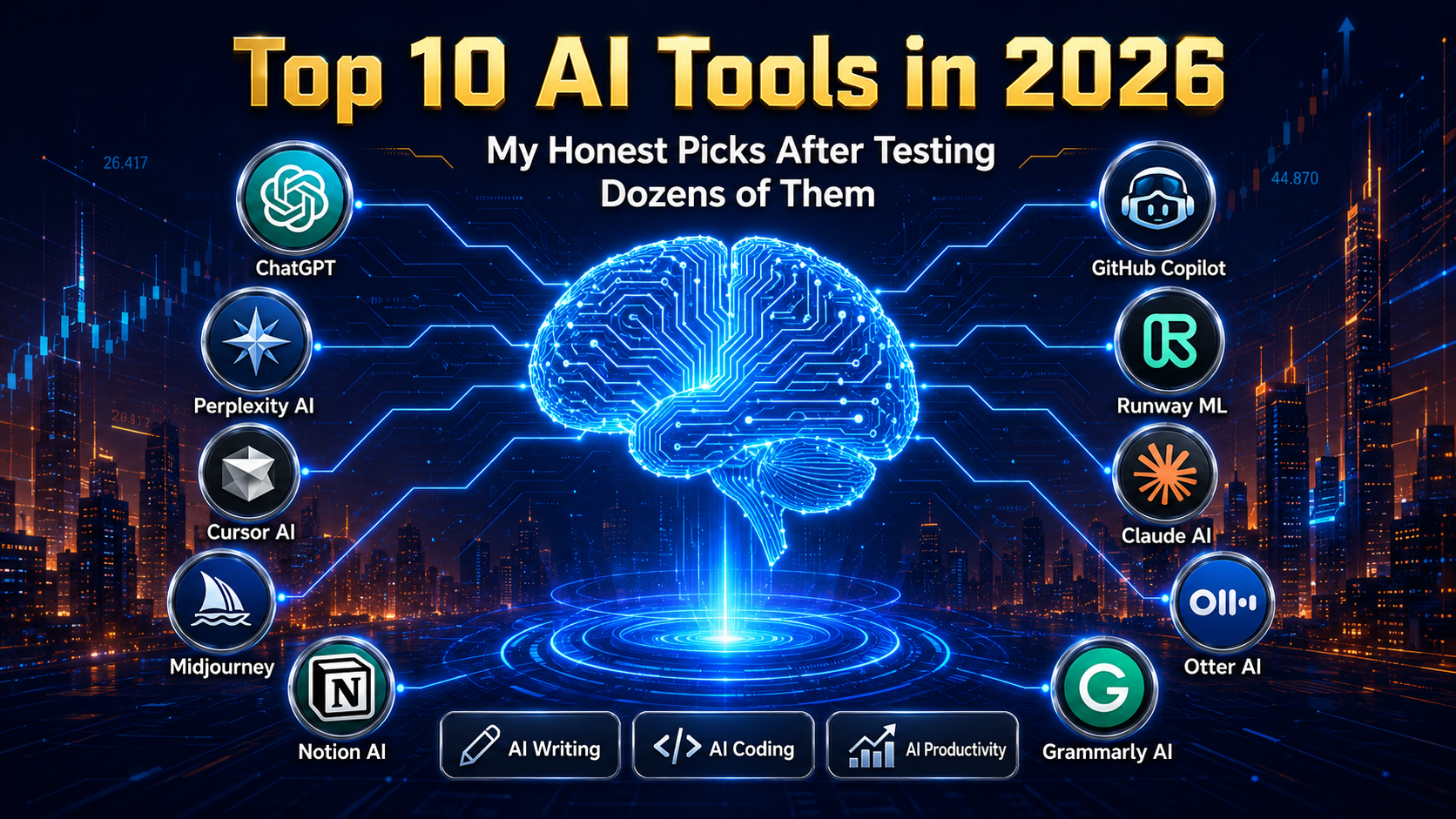
Top 10 AI Tools in 2026: My Honest Picks After Testing Dozens of Them
Introduction
I still remember when people used to ask me “do you even need AI tools?” Now, in 2026, that question feels almost funny. Everyone from students to CEOs is using some kind of AI software to get through their day.
I’ve spent the last few months testing, comparing, and honestly obsessing over the top 10 AI tools in 2026, mostly because my own workflow was getting messy. I had too many tabs open, too many half-finished tasks, and I knew something had to change.
So I decided to dig deep, try things out myself, and put together this list of the top 10 AI tools in 2026 based on real usage, not just marketing claims. I wanted something practical, something I could actually recommend to a friend without feeling like I was reading off a press release.
By the time you finish reading this, you’ll have a clear, honest picture of which tools are genuinely worth adding to your routine this year, and which ones are just noise.
What Are AI Tools?
In the simplest terms, AI tools are software applications powered by artificial intelligence that help you complete tasks faster and smarter. They can write, design, analyze, code, and even talk back to you like a real assistant.
A few years ago, this felt futuristic. Now it’s just Tuesday. Whether you’re a student, a business owner, or someone who just wants to save time on emails, AI productivity tools have quietly become part of daily life, which is exactly why so many people are searching for the top 10 AI tools in 2026 right now.
Why AI Tools Are Important in 2026
Honestly, the biggest reason I lean on AI tools now is time. I don’t have hours to spend writing first drafts, editing photos, or manually organizing spreadsheets anymore.
Businesses are growing faster because automation tools handle the repetitive stuff, freeing up humans for actual decision-making. Students are learning concepts faster with AI tutors that explain things in plain language. Creators are producing more content without burning out.
This is exactly why the top 10 AI tools in 2026 matter so much right now. It’s not about replacing people, it’s about giving all of us more breathing room.
The Evolution of AI Tools
I remember when AI tools felt clunky and robotic, spitting out generic responses that barely made sense. Fast forward to now, and the difference is night and day.
Early AI software 2026 predecessors could barely hold a conversation. Today’s generative AI tools understand context, tone, and even personal writing style. That evolution is a huge reason the top 10 AI tools in 2026 feel less like gadgets and more like genuine assistants.
Looking ahead, I expect this growth to continue, with tools becoming even more personalized and proactive instead of just reactive.
Top 10 AI Tools in 2026 (My Honest Picks)
This is the part I’ve been most excited to write. These are the tools I actually use, tested personally, and would recommend without hesitation.
1. ChatGPT
ChatGPT remains one of my daily go-to tools for brainstorming, drafting, and even working through tricky problems out loud. What I love is how naturally it adapts to conversation, almost like chatting with a really well-read friend who never runs out of patience.
I use it for outlining articles, summarizing long documents, drafting emails, and even bouncing around business ideas late at night when nobody else is awake to talk to. Over time it has genuinely gotten better at understanding what I actually mean instead of just what I literally typed, which makes a huge difference when you’re working fast.
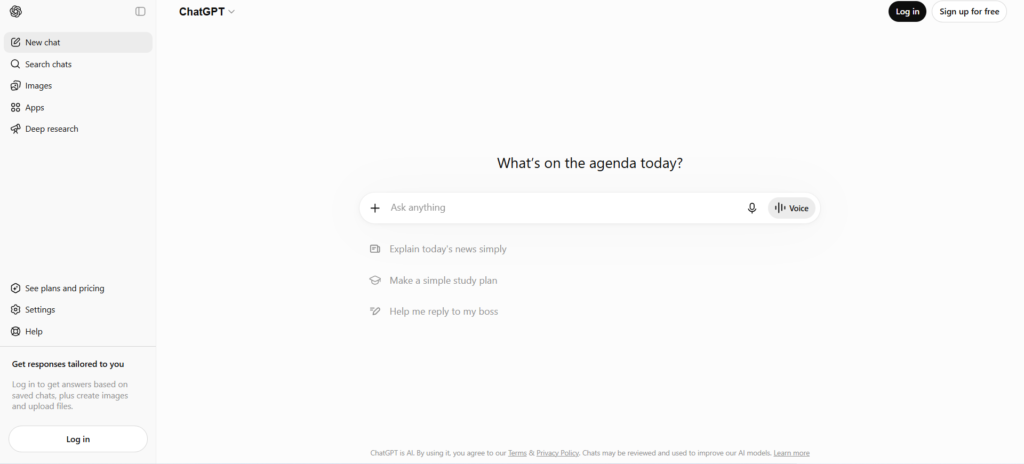
For beginners exploring this space, this is usually the easiest starting point, mainly because the interface is so simple and forgiving. You don’t need any technical background to get real value out of it from day one, and that accessibility is a big part of why it still leads the pack.
Pros:
- Extremely beginner-friendly and easy to start using immediately
- Handles a huge range of tasks, from writing to brainstorming to coding help
- Massive plugin and integration ecosystem
Cons:
- Can occasionally sound a bit generic without specific prompting
- Free tier gets slower during peak usage hours
2. Perplexity AI
I’ve genuinely grown to rely on Perplexity AI for research-heavy tasks. Unlike a typical search engine, it pulls together sources and gives me a direct, cited answer instead of ten tabs to sort through myself, which has saved me an enormous amount of time on client research.
What really won me over is how transparent it is about where its information comes from. I can actually click through to the original sources, verify claims myself, and build genuine trust in what I’m reading instead of just hoping it’s accurate.
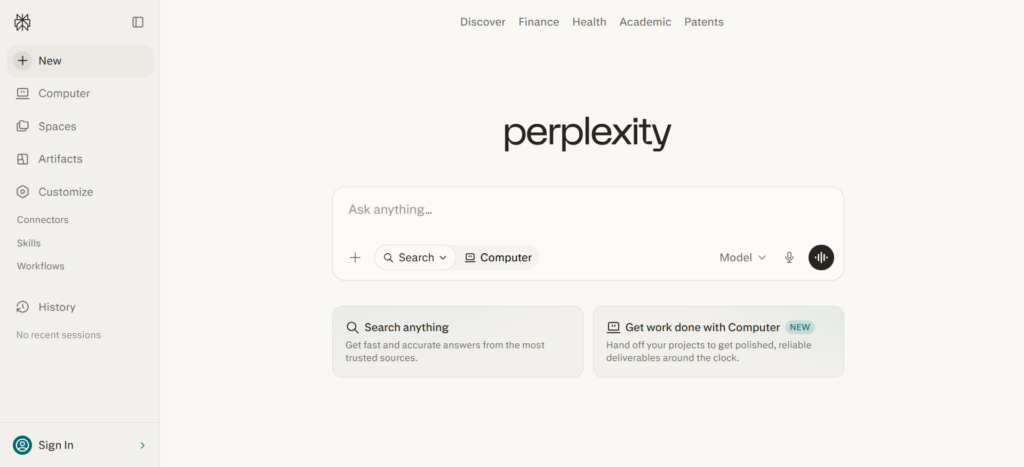
I actually wrote a full breakdown of my experience in my Perplexity AI Review, where I go deep into how it compares for everyday research and productivity. It easily earns its spot among the top 10 AI tools in 2026 for anyone who values accuracy over guesswork, especially when you’re writing anything that needs to hold up under scrutiny.
Pros:
- Cited, source-backed answers you can actually verify
- Great for real-time, up-to-date information
- Clean, distraction-free interface
Cons:
- Not really built for creative writing or long-form content
- Free plan limits daily searches on the more advanced models
3. Cursor AI
As someone who codes regularly, Cursor AI completely changed how I write and debug software. It feels like having a senior developer sitting beside me, except it never gets tired of my questions and never makes me feel silly for asking something basic.
What impressed me most is how well it understands my entire codebase rather than just the file I have open. That context awareness turns simple prompts into genuinely useful suggestions, and it’s noticeably cut down the time I spend hunting for bugs or rewriting messy functions.
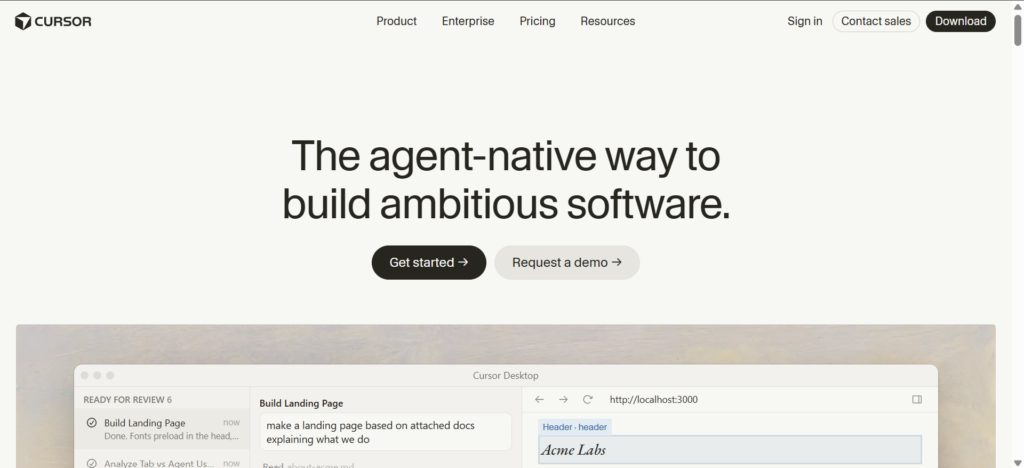
I shared my full daily experience in my Cursor AI Review, covering everything from setup to real coding workflows. For developers specifically, this tool alone justifies its place on this list, and honestly, I don’t see myself going back to coding without it.
Pros:
- Deep, whole-project context awareness
- Feels like a natural evolution of a familiar code editor
- Strong at refactoring and bug detection
Cons:
- Free plan request limits can feel tight for heavy daily use
- Slight learning curve if you’re brand new to AI-assisted coding
4. Midjourney
Midjourney remains my favorite for generating creative visuals when I need something eye-catching fast. The image quality has improved dramatically, and the level of creative control feels genuinely artistic now, not just automated and generic.
I’ve used it for blog thumbnails, mood boards, concept art, and even personal art projects that had nothing to do with work at all. What keeps me coming back is how each generation feels a little different, a little unexpected, in a good way that keeps the process fun instead of mechanical.

It’s easily one of the most fun entries on this list, and if you’ve never tried an AI image generator before, this is genuinely a great place to start experimenting.
Pros:
- Outstanding image quality and artistic style
- Great for thumbnails, concept art, and creative projects
- Active community for inspiration and prompt ideas
Cons:
- No free plan anymore, so there’s an upfront cost to try it
- Works primarily through Discord, which isn’t ideal for everyone
5. Notion AI
Notion AI quietly became part of my daily planning routine. It helps me organize notes, summarize meeting minutes, and even draft quick project outlines without leaving my workspace, which keeps my whole day feeling less scattered.
The part I appreciate most is how it works directly inside documents I’m already using, instead of forcing me to copy and paste between different apps. That small design choice ends up saving a surprising amount of mental energy over the course of a week.
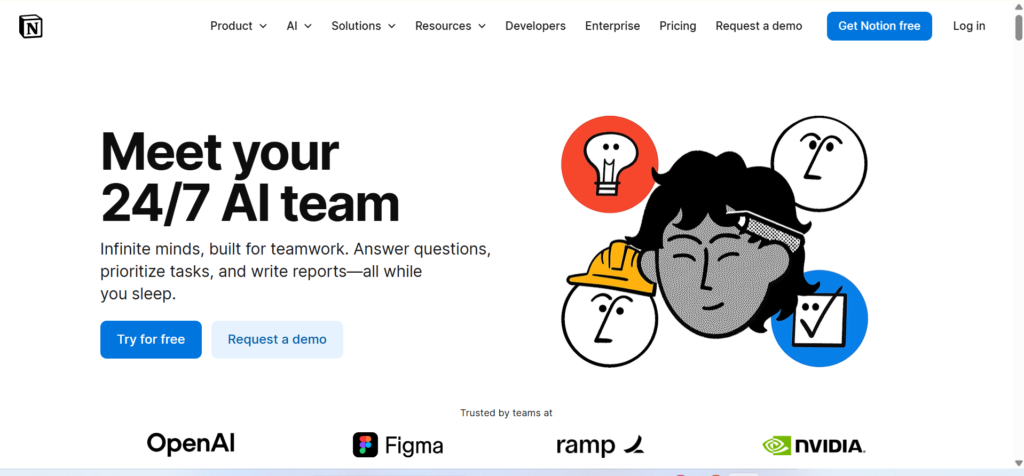
For anyone juggling multiple projects, this tool blends productivity and organization in a way that feels effortless, and it’s become one of those quiet background tools I’d genuinely miss if it disappeared.
Pros:
- Built directly into your existing notes and documents
- Great for summarizing, organizing, and outlining
- Keeps your entire workflow in one place
Cons:
- Best value only shows up if you’re already using Notion regularly
- AI features cost extra on top of the base Notion plan
6. GitHub Copilot
I still use GitHub Copilot alongside Cursor AI, mainly for quick autocomplete while coding inside my regular editor setup. It’s fast, reliable, and genuinely useful for smaller coding tasks where I just need a line or two finished quickly.
What stands out is how well it’s integrated into everyday developer workflows, especially if you’re already comfortable inside GitHub’s ecosystem. It doesn’t try to reinvent how you code, it just quietly makes the process faster.
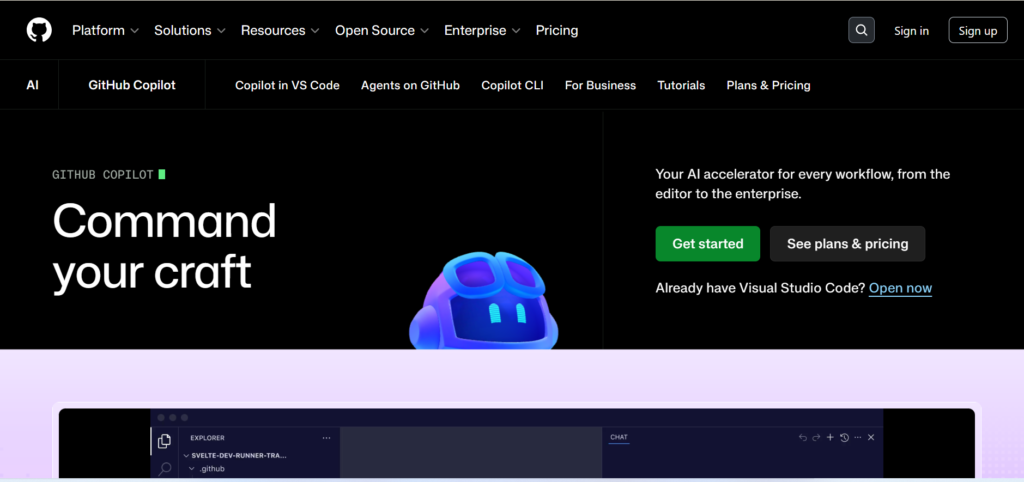
For developers comparing options, it’s worth testing both to see which workflow fits better, since each tool has slightly different strengths depending on the size and complexity of what you’re building.
Pros:
- Fast, reliable autocomplete inside familiar editors
- Tight integration with GitHub and existing dev tools
- Good for smaller, quick coding tasks
Cons:
- Less context-aware than full AI-native editors
- Subscription-only, no long-term free tier
7. Runway ML
Runway has become my shortcut for quick video editing and AI-generated video clips. What used to take hours in traditional editing software now takes minutes, which has honestly changed how often I’m willing to experiment with video content at all.
I’ve used it to clean up rough footage, generate short creative clips, and add effects that would have normally required much more advanced editing skills. The learning curve is refreshingly gentle for something this powerful.

Content creators exploring the top 10 AI tools in 2026 for video work should definitely have this on their radar, especially if you’re a solo creator without a full editing team behind you.
Pros:
- Dramatically speeds up video editing and generation
- Gentle learning curve for something this advanced
- Great for solo creators without a full editing team
Cons:
- Processing credits can run out fast with heavy use
- Higher-end features require a paid plan
8. Claude AI
Claude AI earned its spot on this list fast once I started using it seriously for writing and coding support. What stood out immediately was how naturally structured its responses feel, with far less filler and far more clarity than I expected.
I lean on it heavily for longer writing projects, since it handles large documents and multi-step instructions really well without losing track of context halfway through. It’s also become a genuine favorite among developers, quietly powering several coding tools I already use daily.

Between its strong writing quality and its growing reputation for thoughtful, well-structured answers, Claude AI has become one of my most trusted picks on this list, especially for anyone who values precision over flashy extras.
Pros:
- Excellent at following detailed instructions precisely
- Handles long documents and complex context very well
- Clean, well-structured writing with minimal fluff
Cons:
- No built-in image generation
- Free plan has daily usage limits that heavy users may outgrow
9. Otter AI
Otter AI handles my meeting transcriptions and note-taking automatically. I stopped manually typing notes during calls months ago, and I genuinely don’t miss it, since I can actually stay present in conversations instead of half-listening while I type.
Beyond just transcription, it’s surprisingly good at summarizing key points afterward, so I don’t need to scroll through a full transcript just to remember what was decided. That alone has saved me from a handful of awkward follow-up emails asking people to repeat themselves.
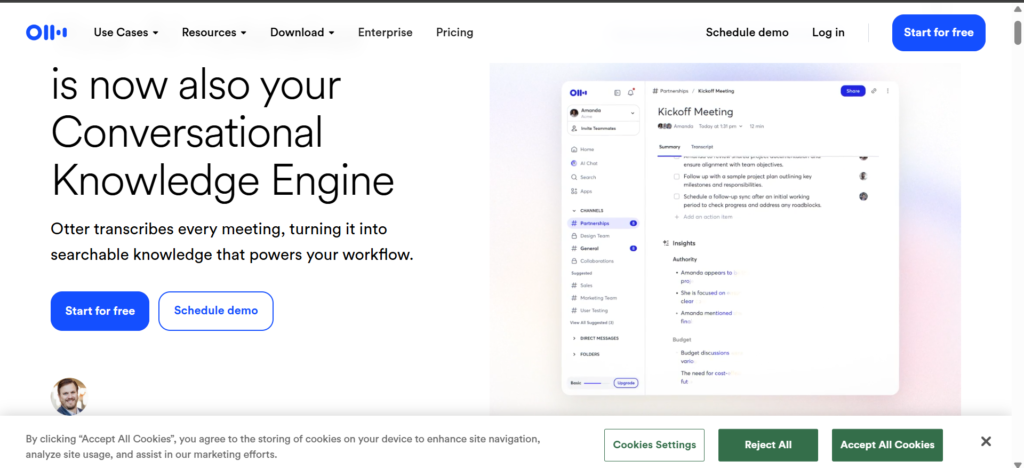
For anyone attending frequent meetings, this tool alone can save hours every week, and it’s one of those AI tools you don’t fully appreciate until you try working without it again.
Pros:
- Accurate, automatic meeting transcription
- Helpful post-meeting summaries save review time
- Frees you up to stay present during calls
Cons:
- Accuracy can dip with heavy accents or background noise
- Free plan has limited monthly transcription minutes
10. Grammarly AI
Grammarly AI still catches mistakes I miss, even after years of writing professionally. Beyond grammar, its tone suggestions have genuinely improved how my writing reads to different audiences, which matters a lot when I’m switching between casual blog posts and more formal client work.
It runs quietly in the background across almost everything I write, from emails to full articles, which means I rarely think about it until it flags something I would have otherwise missed. That kind of dependable, low-effort usefulness is exactly what makes it stick around in my toolkit.
It’s a simple, dependable pick to round out this list of the top 10 AI tools in 2026, and honestly, it’s one of the easiest tools on this list to justify keeping long term.
Pros:
- Reliable grammar, spelling, and tone suggestions
- Works quietly in the background across most apps and browsers
- Genuinely easy to use, even for total beginners
Cons:
- Advanced tone and clarity features require a paid plan
- Occasionally overcorrects stylistic choices that were intentional
How These AI Tools Help in Daily Life
Looking back at my own routine, these tools touch almost everything I do. Work productivity has improved because repetitive tasks now take minutes instead of hours.
Content creation feels less overwhelming since I’m not starting from a blank page anymore. Marketing tasks move faster with AI handling first drafts of copy and creative assets.
Business automation has freed up time for actual strategy instead of manual busywork. Even students benefit hugely, using these tools to simplify complex topics and manage their study schedules better.
Best Users of AI Tools
From what I’ve seen, beginners benefit the most from user-friendly tools like ChatGPT and Claude AI, since the learning curve is gentle. Freelancers save serious time using automation tools for client work and communication.
Bloggers and content creators lean on generative AI tools for drafting and editing faster. Business owners use these tools to scale operations without hiring extra hands immediately.
Developers, of course, get massive value from coding-focused AI software 2026 options like Cursor AI and GitHub Copilot.
Free vs Paid AI Tools
I’ve tested both free and paid versions of most tools on this list, and honestly, free plans are a great starting point. They let you explore features without financial commitment.
That said, paid plans usually unlock faster processing, higher usage limits, and more advanced capabilities. If you’re using these tools professionally, the upgrade often pays for itself in saved time alone.
My honest advice: start free, then upgrade only once you know exactly which top 10 AI tools in 2026 fit your actual workflow.
The Future of AI Tools
Looking ahead, I expect AI tools to become even more personalized, almost anticipating what you need before you ask. Automation will likely expand beyond single tasks into entire connected workflows.
I don’t see AI replacing human creativity or judgment anytime soon. Instead, I think we’re heading toward a genuine human plus AI collaboration, where the best results come from both working together.
My Personal Experience and Opinion
I’ll be honest, I didn’t expect to rely on this many AI tools daily when I first started testing them. But after weeks of consistent use, my workflow genuinely changed for the better.
What I appreciate most is how these tools quietly remove friction from my day. I’m not fighting with blank pages, disorganized notes, or repetitive manual tasks anymore.
If you asked me to recommend just one thing from this whole list, I’d say don’t overthink it. Pick two or three from the top 10 AI tools in 2026 that match your actual needs, and build your workflow around those first.
Conclusion
Wrapping this up, exploring the top 10 AI tools in 2026 has genuinely reshaped how I work, create, and manage my day. Each tool on this list earned its spot through real, hands-on use, not just hype.
Whether you’re a student, freelancer, developer, or business owner, there’s something here that can make your life noticeably easier. I’d encourage you to start small, test a couple of tools from the top 10 AI tools in 2026, and build from there.
The future of work is clearly leaning toward smarter collaboration between humans and AI, and honestly, I think that’s a good thing.
Plece Check This Artical