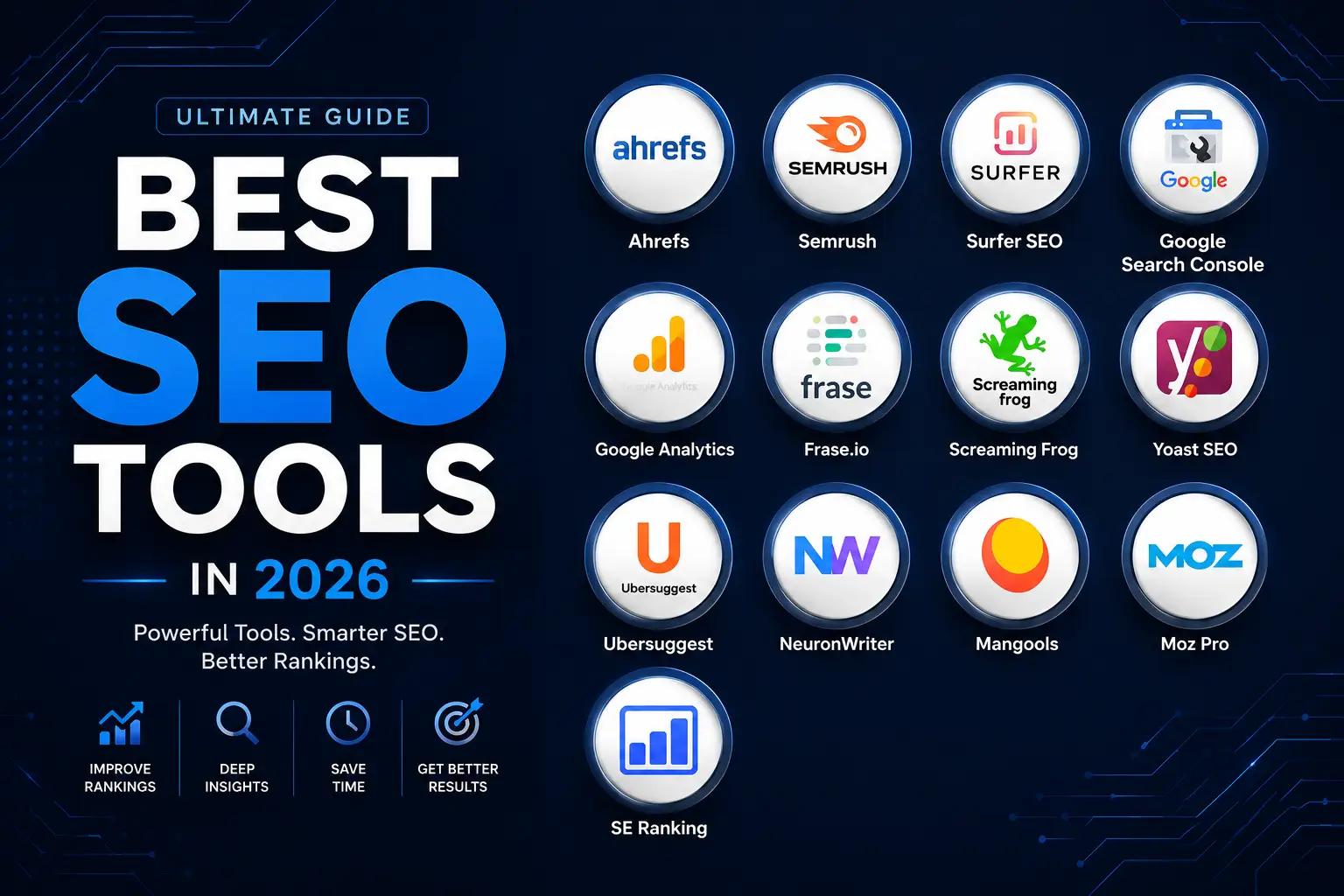
Best SEO Tools in 2026: My Honest Picks After Testing Dozens of Them
Introduction
Finding the best SEO tools in 2026 took me longer than I expected, mostly because there are so many options now claiming to be the “must-have” solution. I’ve spent months testing different platforms across my own websites, alongside the AI tools I already rely on daily, trying to figure out which ones actually moved the needle and which ones were just noise.
I run multiple content-focused sites, and ranking consistently requires more than just good writing. You need the right tools for keyword research, on-page optimization, backlink tracking, and content auditing. That’s exactly why I put together this honest list of the best SEO tools in 2026, based entirely on my own hands-on experience across real, live projects.
This isn’t a list copied from a comparison chart somewhere. Everything here comes from tools I’ve genuinely used on real projects, including plenty of trial and error along the way. By the end, you’ll know exactly which ones are worth your time and budget this year, and just as importantly, which ones you can safely skip.
What Are SEO Tools?
SEO tools are software platforms designed to help you research keywords, analyze competitors, audit your website, track rankings, and optimize content for search engines. They take a lot of the guesswork out of ranking and replace it with actual data, rather than intuition or trial and error alone.
Whether you’re a blogger, a business owner, or an agency managing multiple clients, the best SEO tools in 2026 give you visibility into what’s actually working and what needs fixing on your site, often surfacing problems you’d never notice just by browsing your own pages.
Why the Best SEO Tools Matter in 2026
Search engines have gotten smarter, and honestly, so has the competition. Ranking well now requires understanding search intent, content depth, technical health, and backlink quality all at once. Doing that manually is nearly impossible at scale, especially once you’re managing more than a handful of pages or trying to compete against sites with entire teams behind them.
This is exactly why using the best SEO tools in 2026 has become less of a luxury and more of a necessity. Businesses grow faster when they can spot content gaps quickly. Bloggers save time by not guessing which keywords are worth targeting. Even small, one-person operations can compete with bigger sites once they have the right data in front of them, since good data tends to level the playing field far more than raw budget ever could.
The gap between sites that use these tools well and sites that don’t has only widened over the past year, which makes picking the right combination early on more valuable than ever.
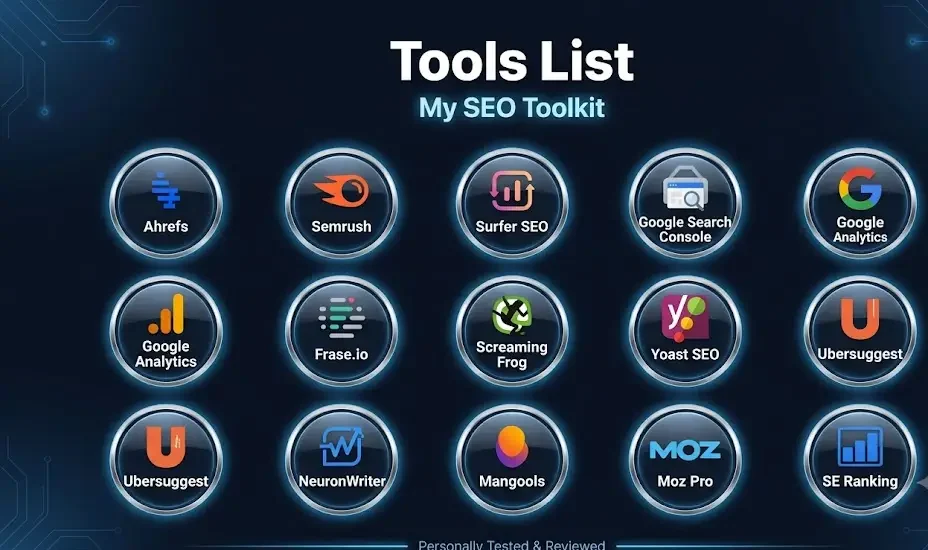
The Best SEO Tools in 2026 (My Honest Picks, Expanded List)
This is the part I’ve been most excited to share. These are tools I’ve personally used, tested across real projects, and would genuinely recommend.
1. Ahrefs
Ahrefs remains one of my most-used tools for backlink analysis and keyword research. The depth of data here is genuinely impressive, and I use it constantly to see exactly what’s ranking for competitor pages before planning my own content.
What keeps me coming back is the Content Explorer feature, which lets me see exactly which pieces of content in my niche are earning the most backlinks and social shares. It’s saved me hours of manual competitor digging.
For anyone serious about competitive research, this is easily one of the best SEO tools in 2026, especially if backlink tracking is a priority. The learning curve is a little steep at first, but the payoff in data quality is well worth the time investment.
2. Semrush
Semrush has become my go-to for all-in-one SEO management, from site audits to keyword tracking. What I appreciate most is how it consolidates so many separate tasks into a single dashboard, which saves a surprising amount of time.
The Position Tracking feature has become part of my weekly routine, showing me exactly how my rankings shift over time across different keywords. Combined with the Site Audit tool, I can catch technical issues before they turn into bigger ranking problems.
It’s a strong pick among the best SEO tools in 2026 for anyone managing multiple websites or client projects at once. The pricing sits on the higher end, but for agencies or serious content operations, it genuinely earns its cost.
3. Surfer SEO
Surfer SEO has genuinely changed how I approach on-page optimization. It analyzes top-ranking pages for a given keyword and gives me a clear content structure to follow, including word count targets and key terms to include.
I use this on nearly every article I publish now, running my draft through its content score before hitting publish. Watching that score improve as I add relevant terms has genuinely sharpened my own instincts for what comprehensive content actually looks like.
It’s easily one of the most practical entries among the best SEO tools in 2026 for content-focused sites like mine, especially if you’re publishing frequently and want consistency across every article.
4. Google Search Console
Google Search Console remains free, essential, and something I check almost daily. It shows exactly how Google sees your site, which queries are driving impressions, and where technical issues might be hurting performance.
The Performance report has become one of my favorite places to spot quick-win opportunities, pages ranking on page two that just need a small content refresh to push into page one. Indexing reports also catch problems long before they’d otherwise show up as a traffic drop.
No list of the best SEO tools in 2026 would feel complete without this one, especially since it’s directly from Google itself and reflects exactly what the search engine sees, not an estimate from a third party.
5. Google Analytics
Alongside Search Console, Google Analytics helps me understand actual user behavior once traffic lands on my site. Bounce rates, time on page, and conversion paths all become visible here, which shapes how I adjust content afterward.
I’ve used engagement data here more than once to realize a high-ranking page was actually underperforming once visitors arrived, which led me to rework the intro or restructure headings to keep readers on the page longer.
It’s free, reliable, and remains a foundational pick among the best SEO tools in 2026 for understanding what happens after the click, not just whether someone clicked at all.
6. Frase.io
Frase.io has been my shortcut for quick content briefs and competitor research summaries. I use it especially when I need to understand search intent fast, without manually reading through a dozen competing articles myself.
The AI-assisted outline generator has genuinely sped up my planning process, giving me a solid starting structure that I then adjust based on my own voice and experience rather than starting from a completely blank page. I often pair this with the prompting habits I picked up while writing my Best Way to Use ChatGPT in 2026 guide, since giving Frase clear context produces noticeably better outlines too.
For content teams working at volume, this is a genuinely efficient addition to any best SEO tools in 2026 stack, particularly for teams that need to produce a high volume of well-researched content quickly.
7. Screaming Frog
Screaming Frog handles technical SEO audits better than almost anything else I’ve used. Crawling an entire site to catch broken links, duplicate meta descriptions, or missing alt text has saved me from countless avoidable ranking issues.
I run a full crawl every time I publish a batch of new content, just to make sure nothing broke internal linking structure or introduced duplicate title tags without me noticing.
It’s a little more technical than some other tools on this list, but it’s absolutely one of the best SEO tools in 2026 for anyone serious about technical health, especially once your site grows past a handful of pages.
8. Yoast SEO
For WordPress users specifically, Yoast SEO remains a simple, reliable plugin for on-page optimization basics like meta titles, readability, and internal linking suggestions. It’s beginner-friendly without sacrificing usefulness.
The readability checker alone has quietly improved my writing style over time, nudging me toward shorter sentences and clearer paragraph breaks without feeling like a rigid rulebook.
If you’re just getting started, this is genuinely one of the easiest best SEO tools in 2026 to implement immediately, since it lives directly inside your WordPress dashboard with no separate login required.
9. Ubersuggest
Ubersuggest has been my budget-friendly pick for keyword research when I don’t need the full depth of Ahrefs or Semrush. It’s simple, affordable, and still gives solid keyword difficulty and volume estimates.
I often use it as a quick first-pass check before committing to a deeper dive in a more expensive tool, which saves me from paying for premium credits on keywords that turn out to be dead ends anyway.
For solo bloggers or small business owners just starting out, this is a smart, low-cost entry among the best SEO tools in 2026 that doesn’t sacrifice much in exchange for the lower price.
10. NeuronWriter
NeuronWriter rounds out my list as another strong content optimization tool, analyzing top-ranking competitors and suggesting semantic keywords to strengthen topical coverage. I use it as a secondary check alongside Surfer SEO for extra confidence before publishing.
What sets it apart slightly is its content editor’s focus on semantic relevance rather than just keyword frequency, which has helped me avoid the trap of over-stuffing obvious terms while missing genuinely related concepts.
It’s a newer name compared to some others here, but it’s quickly earned its spot among the best SEO tools in 2026 that I actually reach for regularly, especially as a second opinion alongside my primary optimization tool. For the actual writing and editing that happens after the optimization pass, I lean on a proper AI writing assistant, which I cover in my Claude AI for Beginners guide if you’re looking to pair SEO tools with a solid writing workflow.
11. Mangools (KWFinder)
Mangools has become my recommendation for anyone just starting out and feeling overwhelmed by the complexity of bigger platforms. The interface is clean and approachable, and the keyword difficulty scores have consistently matched what I’d expect based on manual SERP checks.
I especially like the SERP Checker feature, which shows a snapshot of ranking pages alongside their estimated domain authority and backlink counts, all without needing to open five separate tabs to piece that picture together myself.
For solo creators or small teams who find Ahrefs or Semrush intimidating at first, Mangools is genuinely one of the friendlier best SEO tools in 2026, without sacrificing much in terms of core keyword research accuracy.
12. Moz Pro
Moz Pro earns its place here largely because of Domain Authority, a metric that’s become something of an industry standard shorthand for site strength, even among people who don’t use Moz directly. I still check it regularly when evaluating potential guest post or backlink opportunities.
The On-Page Grader has also been a reliable second opinion alongside Surfer SEO, occasionally catching small optimization details the other tool missed entirely.
It’s not always my first choice for deep technical work, but as a trusted, long-standing name in the industry, Moz Pro still deserves its spot among the best SEO tools in 2026, especially for link-building research specifically.
13. SE Ranking
SE Ranking has become my budget-conscious alternative to some of the pricier all-in-one platforms, offering rank tracking, site audits, and competitor research at a noticeably lower monthly cost. I’ve used it on smaller client projects where the full Semrush price tag simply wasn’t justified.
The white-label reporting feature has also come in handy when sharing progress updates with clients who just want a clean, branded summary rather than raw dashboard access.
For agencies managing several smaller accounts, this is a genuinely practical addition to any best SEO tools in 2026 stack, striking a solid balance between features and cost.
How These SEO Tools Help Content Rank Better
Looking back at my own results, keyword research tools help me target the right topics from the start, instead of guessing and hoping. On-page optimization tools like Surfer SEO and NeuronWriter make sure my content actually covers what search engines expect to see, based on what’s already ranking well.
Technical tools like Screaming Frog catch issues that would otherwise quietly hurt rankings without any obvious warning sign, things like orphaned pages or broken internal links that never show up in your normal day-to-day workflow. And tracking tools like Search Console and Analytics show me what’s actually working, so I can double down on strategies that are already succeeding instead of guessing blindly.
Together, these tools remove most of the uncertainty around content strategy. Instead of publishing and hoping for the best, I now have a much clearer sense of why something ranked well, or why it didn’t, and what specific change might fix it.
There’s also a compounding effect worth mentioning. Once you’ve used a keyword tool to find the right topic, an on-page tool to structure the content well, and a tracking tool to monitor results, you start building an actual feedback loop. Each published piece teaches you something that improves the next one, which is a very different experience from publishing in isolation and hoping search engines notice.
Free vs Paid SEO Tools
Some of the best SEO tools in 2026 are completely free, like Google Search Console and Google Analytics, and honestly, every website owner should be using both regardless of budget. Ubersuggest also offers a solid free tier for casual keyword research.
Paid tools like Ahrefs, Semrush, and Surfer SEO come with a real cost, but the depth of data and time saved usually justifies the investment once you’re publishing content regularly or managing multiple sites. The difference often shows up in the details, faster crawl speeds, deeper historical data, and more accurate keyword difficulty scores that free tools simply can’t match yet.
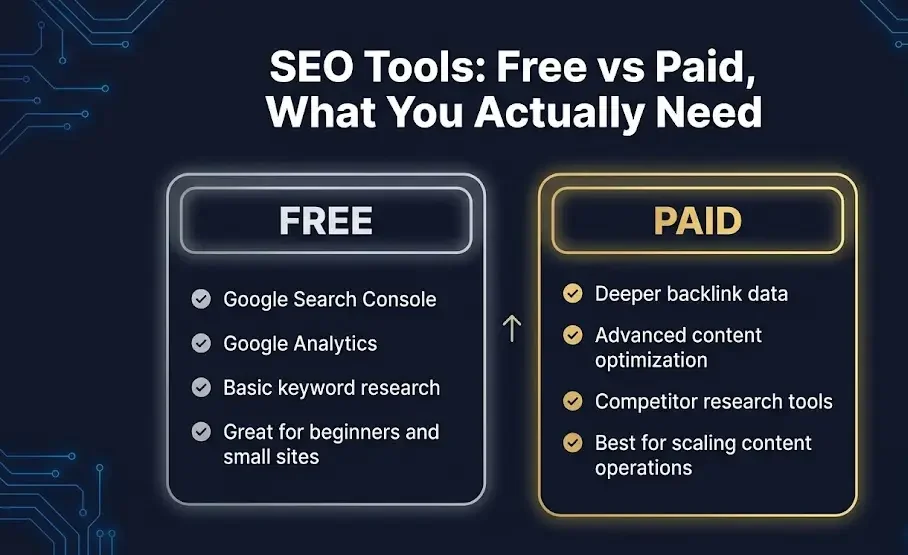
My honest advice is to start with the free tools, get comfortable with the basics, and add paid tools once your content volume actually demands the extra data. There’s no point paying for enterprise-level features if you’re publishing one article a month, just as there’s no point staying on free tools forever once you’re managing a serious content operation.
One thing worth mentioning is that pricing tiers within paid tools matter just as much as the free-versus-paid decision itself. Many platforms offer a lower entry tier that covers the essentials, with the pricier plans mostly adding higher usage limits or extra seats for teams. Unless you’re managing multiple large sites or a bigger team, it’s often worth starting on the cheapest paid tier and upgrading only once you’ve genuinely outgrown it.
Who Should Use These SEO Tools?
Bloggers benefit hugely from keyword research and on-page optimization tools that remove the guesswork from topic selection, especially when trying to figure out what a small, independent site can realistically compete for. Small business owners use free tools like Search Console to understand how customers are finding them online, often discovering search terms they never would have thought to target intentionally.
Content agencies managing multiple client sites rely heavily on all-in-one platforms like Semrush to stay organized at scale, since juggling separate tools across dozens of client accounts quickly becomes unmanageable. Even developers and technical teams benefit from tools like Screaming Frog when auditing site health before a major launch or redesign, catching issues that would otherwise only surface after traffic already started dropping.
E-commerce store owners also have a lot to gain here, since product page optimization and technical crawl health directly affect how many potential customers even find their listings in the first place. If your SEO research involves interviewing clients or team members for content ideas, a transcription tool is worth adding too, and I’ve shared my full experience with one in my Otter AI Review.
Marketing teams working across multiple channels also benefit from centralizing SEO data alongside their other campaign metrics, since ranking improvements often need to be reported alongside paid ads or social performance to show the full picture of what’s driving traffic and conversions.
My Personal Experience Using These Tools
I’ll be honest, when I first started, I tried to use every tool on this list at once, and it was completely overwhelming. Logging into six different dashboards every morning just to check rankings and site health left me spending more time managing tools than actually creating content.
What actually worked was starting with the free tools first, understanding my own site’s baseline performance, and only adding paid tools once I had a clear sense of what gaps I needed to fill. That shift alone made the entire process feel manageable again instead of draining.
Over time, I settled into a routine: Search Console and Analytics for ongoing monitoring, Ahrefs for competitive research, and Surfer SEO for on-page optimization on every new article. That combination alone has covered the vast majority of what I actually need day to day, and I only pull in the others for specific, occasional tasks like a full technical audit or a deeper content brief.
If you’re just starting to explore the best SEO tools in 2026 for your own site, I’d genuinely recommend resisting the urge to buy everything at once. Build your stack gradually, based on what problems you’re actually running into, rather than what a comparison article tells you that you need on day one.
Looking back over the past year, the biggest lesson wasn’t really about any single tool. It was learning to treat tool data as one input among several, alongside my own judgment about what my specific audience actually wants to read. The tools got me to good decisions faster, but they never replaced the need to actually think critically about the content itself.
Common Mistakes to Avoid When Choosing SEO Tools
Buying every tool at once before understanding your actual needs is probably the single biggest mistake I made early on, and I’ve seen plenty of other site owners fall into the same trap. Subscriptions add up fast, and half-used dashboards don’t help anyone rank better.
Ignoring free tools in favor of paid ones is another common misstep. Google Search Console and Google Analytics genuinely cover a huge portion of what most sites need, and skipping them in favor of a flashy paid dashboard often means missing data that’s coming straight from the source.
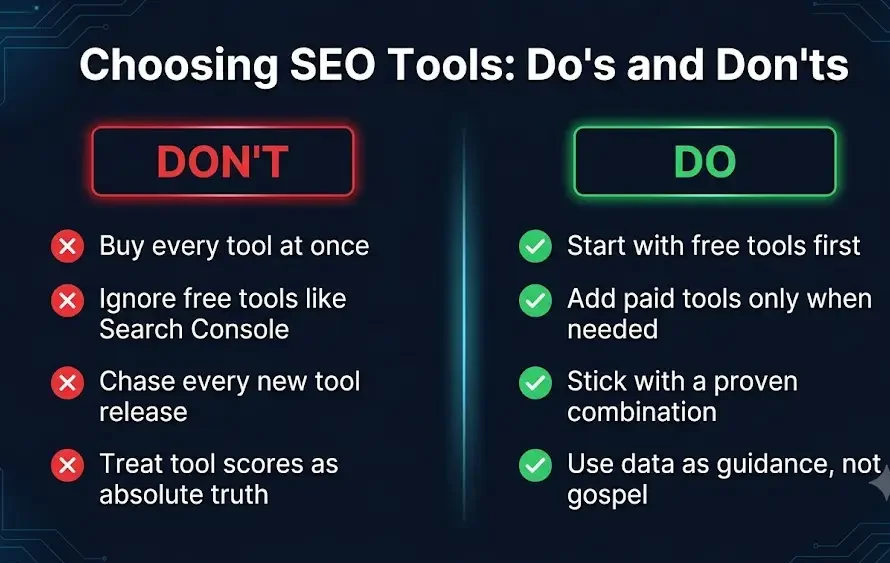
Chasing every new tool release is tempting, especially with how often new AI-powered SEO platforms launch claiming to be revolutionary. In my experience, sticking with a proven combination for a few months, and actually learning its full feature set, produces better results than constantly switching based on hype.
Finally, treating tool output as gospel rather than guidance is a trap worth avoiding. Keyword difficulty scores, content grades, and audit warnings are all estimates based on models, not guarantees. The best SEO tools in 2026 are meant to inform your judgment, not replace it entirely.
Conclusion
Wrapping up this list, exploring the best SEO tools in 2026 has genuinely reshaped how I approach content strategy across all my sites. Each tool here earned its place through real, hands-on use, not just reputation or hype, and each one has saved me time or caught a mistake I would have otherwise missed.
Whether you’re a blogger, a small business owner, or managing SEO for multiple client sites, there’s a combination here that fits your specific needs and budget. I’d encourage you to start with the free tools, understand your own baseline, and build out your stack from there, adding new tools only once you have a clear reason to.
The best SEO tools in 2026 aren’t about collecting every platform available, they’re about finding the small combination that consistently helps you make smarter, faster content decisions, and sticking with that setup long enough to actually see the results compound over time. Give yourself permission to start small, learn as you go, and let your toolkit grow naturally alongside your site.
🔗 Explore More AI Tools Guides
Looking for more AI tools, tutorials, and honest reviews? Explore these hand-tested guides from AppProofed.